

Quick answer
Who supplies shirts in Nairobi, Kenya?
Hurain Garments Exporter (Palanpur, Gujarat, India) is a shirts manufacturer, supplier and exporter serving Nairobi. Orders ship FCL or LCL to Mombasa in about 12–22 days, then 1 day by SGR rail or 2 days by road inland, quoted FOB, CFR or CIF. Formal and casual cotton shirts in solids, checks and stripes, in regular and slim fits for retail, uniform and wholesale buyers.
Why Nairobi needs shirts
Nairobi is the capital of Kenya. Construction sites, factories and industrial plants around Nairobi need coveralls, hi-vis and work shirts. Institutional buyers in Nairobi tender for school and corporate uniforms. Formal and casual shirts are staple stock for menswear retailers and uniform suppliers, reordered as sizes and colours sell out.
Kenya is East Africa's main import gateway, with Mombasa clearing cargo for Uganda, Rwanda, South Sudan and eastern DR Congo, and Nairobi's wholesale districts supplying shops across the region.
Schools, institutions & corporate uniforms in Nairobi
Schools, hospitals and agencies in Nairobi order uniforms every year, usually matched to an approved shade and repeated season after season. A supplier who keeps the shade, size chart and embroidery file wins the next tender.
In Nairobi, schools and colleges and hospitals and clinics buy shirts from us mainly for apparel wholesalers and jobbers and retail chains and department stores.
Delivery of shirts to Nairobi
- 1Export from Mundra or Kandla (Gujarat)Goods are inspected, export-packed and customs-cleared in India, usually within a day's drive of our Palanpur base.
- 2Sea freight to MombasaIndicative transit 12–22 days (East Africa), FCL or LCL, on FOB, CFR or CIF terms.
- 3Inland to NairobiAbout 1 day by SGR rail or 2 days by road, arranged by your clearing agent or forwarder after customs clearance.
Transit times are indicative; the confirmed schedule is set out in the quotation.
Local support for buyers in Nairobi
| Office hours | 24×7 — three 8-hour shifts, every day, so the whole Kenya working day is covered |
|---|---|
| +91 87809 43729 | |
| Phone | +91 87809 43729 |
| hurainengitechandtrade@gmail.com | |
| Languages | English, Hindi, Gujarati, Urdu (local language: English, Swahili) |
| Quotation | USD (KES equivalent on request), within 1–2 business days |
Nairobi: the market for shirts
Nairobi is the capital of Kenya. Construction sites, factories and industrial plants around Nairobi need coveralls, hi-vis and work shirts. Institutional buyers in Nairobi tender for school and corporate uniforms.
Formal and casual shirts are staple stock for menswear retailers and uniform suppliers, reordered as sizes and colours sell out. In Nairobi that demand comes mainly from schools, institutions & corporate uniforms, retail chains & stores and wholesale & trading houses.
Institutional buyers in Nairobi tender for uniforms months before term or contract start. We plan production backwards from the delivery date and keep a buffer for shipping and port delays.
Stores in Nairobi plan ranges two seasons ahead. We sample early, grade carefully and photograph each style, so buyers can commit before the season and receive goods before the first campaign.
Trading houses in Nairobi sell on to shops and market traders, so they judge a supplier on consistent sizing, stable prices and on-time loading. We pack to the size curve of the buyer's customers and keep repeat styles in stock fabric.
Who buys in Nairobi and what sells with shirts
Nairobi is served through Mombasa, with 1 day by SGR rail or 2 days by road to the city; its strongest garment sectors are workwear & safety clothing, schools, institutions & corporate uniforms, retail chains & stores and wholesale & trading houses. Shirts also finds buyers in workwear & safety clothing.
Trousers & Cargo Pants: Chinos and cargo pants bridge work and weekend wear, and utility versions are bought by contractors and uniform suppliers. Many Nairobi buyers add it to the same container.
Workwear & Corporate Uniforms: Mines, oil sites, contractors, hotels and hospitals clothe whole crews, and re-clothe them when contracts start or garments wear out. Many Nairobi buyers add it to the same container.
Polo T-Shirts: Polos are the world's most-ordered uniform top: hotels, security firms, schools and corporates reorder them for staff and renew them every year. Many Nairobi buyers add it to the same container.
T-Shirts: T-shirts are the highest-volume garment: bought as retail basics, promotional merchandise and event wear, in plain and printed styles. Many Nairobi buyers add it to the same container.
Planning your shirts order for Nairobi
Timing decides whether shirts sell at full price or at a discount in Nairobi. Two rainy seasons and a mild climate allow year-round sales, with hoodies and jackets in cooler months. Demand peaks at back-to-school in January, May and August, plus Easter, Christmas and wedding seasons. For shirts specifically, formal shirts sell year-round with peaks before the new school or business year and before festive seasons; linen blends peak for spring and summer orders placed in November–February. Our lead time is 40–55 days from approved sample; 25–30 days on repeat poplin styles, plus sea transit of about 12–22 days, so we advise confirming orders early enough to land the goods before the peak rather than during it.
Typical buyers of shirts in Nairobi include corporate uniform suppliers, menswear retailers, wholesalers in Gulf and African markets and department stores and private-label brands. In Nairobi, they usually order 1,000–2,000 pieces per style, with fabric-led minimums of 1,500 metres for yarn-dyed checks and reorder the styles that sell through, so we keep fabric, size ratios and labels on file for repeat shipments.
Fabric, fit and colour choices for Nairobi
Nairobi is warm for most of the year, so we steer buyers of shirts towards the lighter end of the range: 100% cotton poplin 100–120 GSM or cotton Oxford and pinpoint weaves. Heavier blends feel uncomfortable in the heat and slow sell-through in the shops.
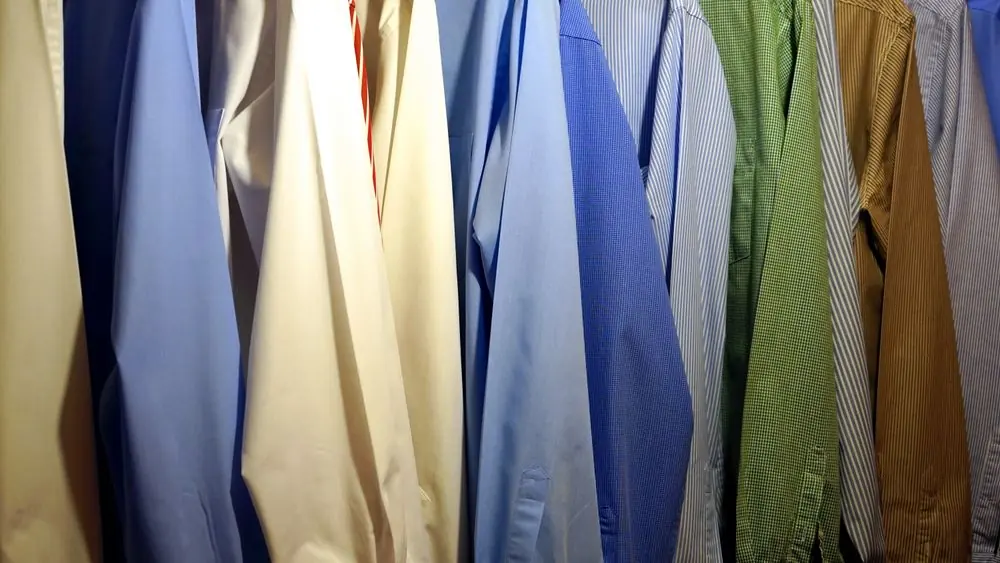
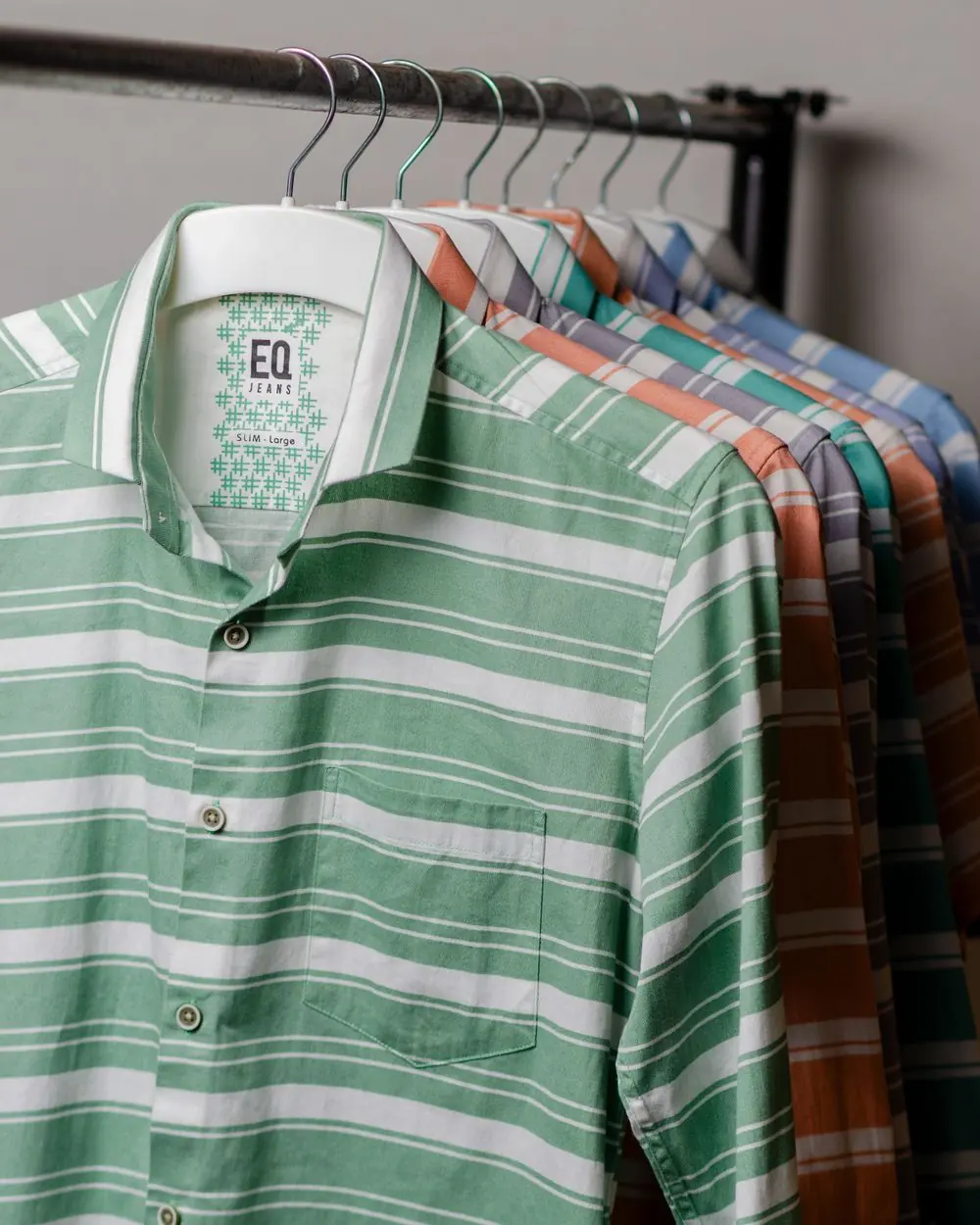
Sizes: Collar 14–18.5 inches or S–3XL, sleeve lengths regular and long; slim, regular and comfort fit blocks. Colours: White, blue, sky, grey, black and navy solids, plus yarn-dyed checks and stripes; custom colourways on yarn-dyed orders.
Shirts made in bulk to your colour, size and design
You are not limited to stock designs. We make shirts in bulk in the colour you choose, in the sizes and size ratio your customers wear, and in the design you supply for the Nairobi market. A reference garment, a tech pack, a sketch or even a photograph is enough to start.
How it works: send a Pantone code or fabric swatch for colour and we return a lab-dip; send your size chart and the ratio you want in each carton; send artwork, print, embroidery or label files for the design. We make a sample for approval and then produce the bulk to that approved sample, so the order you receive matches the one you signed off.
- Colour: White, blue, sky, grey, black and navy solids, plus yarn-dyed checks and stripes; custom colourways on yarn-dyed orders.
- Size: Collar 14–18.5 inches or S–3XL, sleeve lengths regular and long; slim, regular and comfort fit blocks.
- Design and branding: own check and stripe designs on yarn-dyed fabric, embroidered logos for corporate shirts, custom collar and cuff shapes and private-label packing and hang tags.
About our shirts
Corporate and uniform buyers often need the same shirt reproduced for years, so we keep fabric codes, patterns and size grading on file and can match a previous order exactly, including shade, when the next order comes.
A shirt looks simple, but it carries more construction decisions than almost any other garment: collar shape, interlining, stitches per inch, seam allowance and button quality all show up in how the shirt looks after ten washes. Indian shirt factories in Bengaluru, Delhi NCR, Kolkata and Tiruppur are used to supplying European and American brands, and we place orders with units that already pass retail audits.
Buyer's checklist for ordering shirts for Nairobi
- Choose slim, regular or comfort fit and confirm the block
- Approve fabric weight, thread count and shrinkage limits
- Confirm collar and cuff shape and the interlining grade
- Agree packing: folded with stays or on hangers
- Check shade-match tolerance for repeat uniform orders
- Confirm labelling and fibre-content wording for your market
- Check the import and labelling rules for Kenya: imports are cleared through KRA's iCMS with an import declaration; some goods need a Certificate of Conformity under the pre-export verification programme. Confirm with a clearing agent.
- Agree Incoterms (FOB, CFR or CIF Mombasa) and the payment terms: 50% advance with order confirmation and 50% before dispatch against export documents; L/C at sight can be discussed for larger orders.
How we ship shirts to Nairobi
Containers move by sea from Mundra, Kandla or Nhava Sheva to Mombasa, about 12–22 days, then 1 day by SGR rail or 2 days by road to Nairobi. We quote FOB, CFR or CIF, and your clearing agent handles customs and local delivery in Nairobi; we can coordinate with the forwarder you name.
Folded with collar stays and pins in individual polybags, or hanger-packed for retail chains; 20–40 pieces per carton. Before loading we share a photo, video and measurement report so you can approve what is in the container. Machine wash warm, iron medium; easy-care shirts can be tumble dried; care labelling follows the destination market's textile labelling law.
Documents supplied with every shipment: commercial invoice, packing list, certificate of origin and bill of lading, plus test reports and compliance documents where your market asks for them. Payment terms: 50% advance with order confirmation and 50% before dispatch against export documents; L/C at sight can be discussed for larger orders.
Importing shirts into Nairobi: local guide
Practical facts for buyers in Nairobi, Kenya — working days, time difference, customs system, trade-agreement duty and the seasons to plan around.
| Weekend | Saturday–Sunday (many trading firms also work Saturday mornings) |
|---|---|
| Our office hours in your time | 24×7 — three 8-hour shifts, every day, so the whole Kenya working day is covered |
| Country calling code | +254 (our WhatsApp: +91 87809 43729) |
| Business languages | English, Swahili; we correspond in English |
| Currency | Kenyan shilling (KES); quotations in USD |
| Customs system | KenTrade single window and KRA iCMS |
| Tariff framework | East African Community (EAC) common external tariff |
| Trade agreement with India | No India-specific trade agreement; standard (MFN) duty applies |
| Plan orders around | Ramadan and the Eid holidays, plus the Christmas–New Year period |
Leading buyer segments in Nairobi
- Workwear & safety clothingBuys shirts: Oil, gas and mining contractors, Construction and engineering firms, Factories and utilities
- Schools, institutions & corporate uniformsBuys shirts: Schools and colleges, Hospitals and clinics, Government departments
- Retail chains & storesBuys shirts: Department stores, Shopping-mall brands, Independent boutiques
- Wholesale & trading housesBuys shirts: Garment wholesalers and jobbers, Import–export trading houses, Market and bazaar traders
- Ethnic, festive & diaspora wearAlso buys: Ethnic-wear boutiques, Festival and wedding retailers, Modest-fashion stores
Shirts range for Nairobi
Types of shirts available
- Formal poplin shirts
- Oxford button-down shirts
- Casual checked shirts
- Striped business shirts
- Linen-blend summer shirts
- Chambray and denim shirts
- Mandarin-collar shirts
- Short-sleeve office and uniform shirts
Standards: ISO 105 colour fastness, AATCC test methods, OEKO-TEX STANDARD 100 on request, AQL 2.5 inspection or the standard your project specifies. Imports are cleared through KRA's iCMS with an import declaration; some goods need a Certificate of Conformity under the pre-export verification programme. Confirm with a clearing agent.