



Quick answer
Who is a reliable shirts supplier and exporter for Ethiopia?
Hurain Garments Exporter, based in Palanpur, Gujarat, manufactures, wholesales and exports shirts to buyers in Ethiopia, including Addis Ababa, Debre Birhan, Dire Dawa. We quote FOB, CFR or CIF Djibouti with about 12–22 days sea transit and full export documents.
Why Ethiopia needs shirts
Ethiopia has more than 120 million people and a growing middle class in Addis Ababa; imports are constrained by foreign-currency availability, so buyers favour dependable suppliers who can offer terms.
Formal and casual shirts are staple stock for menswear retailers and uniform suppliers, reordered as sizes and colours sell out.
Retail chains & stores in Ethiopia
Retail chains, department stores and independent shops in Addis Ababa and Dire Dawa restock with imported shirts, T-shirts, jeans and kidswear, and increasingly ask for private-label ranges.
In Ethiopia, department stores and shopping-mall brands buy shirts from us mainly for apparel wholesalers and jobbers and retail chains and department stores.
Top 12 cities for shirts in Ethiopia
Ranked by how closely each city's industries match the buyers of shirts. Every city links to its own page with local delivery details.
- 01Shirts in Addis Ababavia Djibouti · 2–3 days by rail or roadSchools, institutions & corporate uniformsRetail chains & storesWholesale & trading houses
- 02Shirts in Debre Birhanvia Djibouti · 2–3 days by roadSchools, institutions & corporate uniformsRetail chains & storesWholesale & trading houses
- 03Shirts in Dire Dawavia Djibouti · 1–2 days by rail or roadSchools, institutions & corporate uniformsWholesale & trading housesRetail chains & stores
- 04Shirts in Adamavia Djibouti · 2 days by rail or roadSchools, institutions & corporate uniformsWholesale & trading housesRetail chains & stores
- 05Shirts in Kombolchavia Djibouti · 2 days by roadSchools, institutions & corporate uniformsWholesale & trading housesWorkwear & safety clothing
- 06Shirts in Bishoftuvia Djibouti · 2–3 days by roadSchools, institutions & corporate uniformsWholesale & trading housesWorkwear & safety clothing
- 07Shirts in Dessievia Djibouti · 2–3 days by roadRetail chains & storesWholesale & trading houses
- 08Shirts in Gondarvia Djibouti · 3–4 days by roadRetail chains & storesWholesale & trading houses
- 09Shirts in Jimmavia Djibouti · 3–4 days by roadRetail chains & storesWholesale & trading houses
- 10Shirts in Hawassavia Djibouti · 3 days by roadSchools, institutions & corporate uniformsWholesale & trading houses
- 11Shirts in Mekellevia Djibouti · 2–3 days by roadWholesale & trading housesWorkwear & safety clothing
- 12Shirts in Bahir Darvia Djibouti · 3–4 days by roadWholesale & trading houses
The garment market in Ethiopia
Ethiopia has more than 120 million people and a growing middle class in Addis Ababa; imports are constrained by foreign-currency availability, so buyers favour dependable suppliers who can offer terms.
Buyers here are importers and wholesalers in Addis Ababa supply retailers and the Merkato; hotels and institutions buy uniforms; fashion brands buy cotton and specialist lines.
What buyers in Ethiopia look for
Value cotton garments, school uniforms, T-shirts, kidswear and traditional-style fabrics and scarves sell well; Indian cotton and embroidered garments are popular.
Highland weather is mild, with cooler months from June to September. Demand peaks around Ethiopian New Year (September), Christmas (January) and Easter.
Import rules and labelling for Ethiopia
Imports require an import permit and bank arrangements for foreign currency; goods arrive through Djibouti. Confirm current rules with your bank and broker.
Duties and taxes: Import duty plus VAT (EAC / COMESA frameworks where applicable). Rates change, so confirm the HS code and duty with your customs broker before you finalise landed cost; we supply the invoice, packing list and certificate of origin needed for clearance.
Planning your shirts order for Ethiopia
A shirts order for Ethiopia should be planned backwards from the selling season. Highland weather is mild, with cooler months from June to September. Demand peaks around Ethiopian New Year (September), Christmas (January) and Easter. For shirts specifically, formal shirts sell year-round with peaks before the new school or business year and before festive seasons; linen blends peak for spring and summer orders placed in November–February. Our lead time is 40–55 days from approved sample; 25–30 days on repeat poplin styles, plus sea transit of about 12–22 days, so we advise confirming orders early enough to land the goods before the peak rather than during it.
Typical buyers of shirts in Ethiopia include corporate uniform suppliers, menswear retailers, wholesalers in Gulf and African markets and department stores and private-label brands. Around Addis Ababa and Dire Dawa, they usually order 1,000–2,000 pieces per style, with fabric-led minimums of 1,500 metres for yarn-dyed checks and reorder the styles that sell through, so we keep fabric, size ratios and labels on file for repeat shipments.
Fabric, fit and colour choices for Ethiopia
Because the climate in Ethiopia is hot, breathable fabrics move fastest. For shirts we recommend 100% cotton poplin 100–120 GSM, with cotton-polyester blend for easy-care shirts as a value alternative, and we keep the heavier options for the cooler months only.
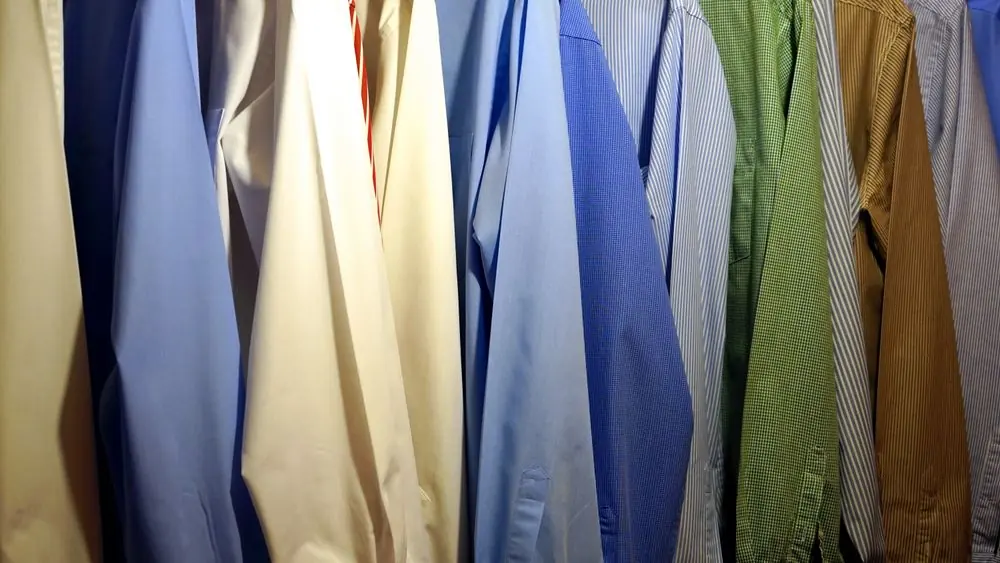
Sizes: Collar 14–18.5 inches or S–3XL, sleeve lengths regular and long; slim, regular and comfort fit blocks. Colours: White, blue, sky, grey, black and navy solids, plus yarn-dyed checks and stripes; custom colourways on yarn-dyed orders.
Shirts made in bulk to your colour, size and design
You are not limited to stock designs. We make shirts in bulk in the colour you choose, in the sizes and size ratio your customers wear, and in the design you supply for the Ethiopia market. A reference garment, a tech pack, a sketch or even a photograph is enough to start.
How it works: send a Pantone code or fabric swatch for colour and we return a lab-dip; send your size chart and the ratio you want in each carton; send artwork, print, embroidery or label files for the design. We make a sample for approval and then produce the bulk to that approved sample, so the order you receive matches the one you signed off.
- Colour: White, blue, sky, grey, black and navy solids, plus yarn-dyed checks and stripes; custom colourways on yarn-dyed orders.
- Size: Collar 14–18.5 inches or S–3XL, sleeve lengths regular and long; slim, regular and comfort fit blocks.
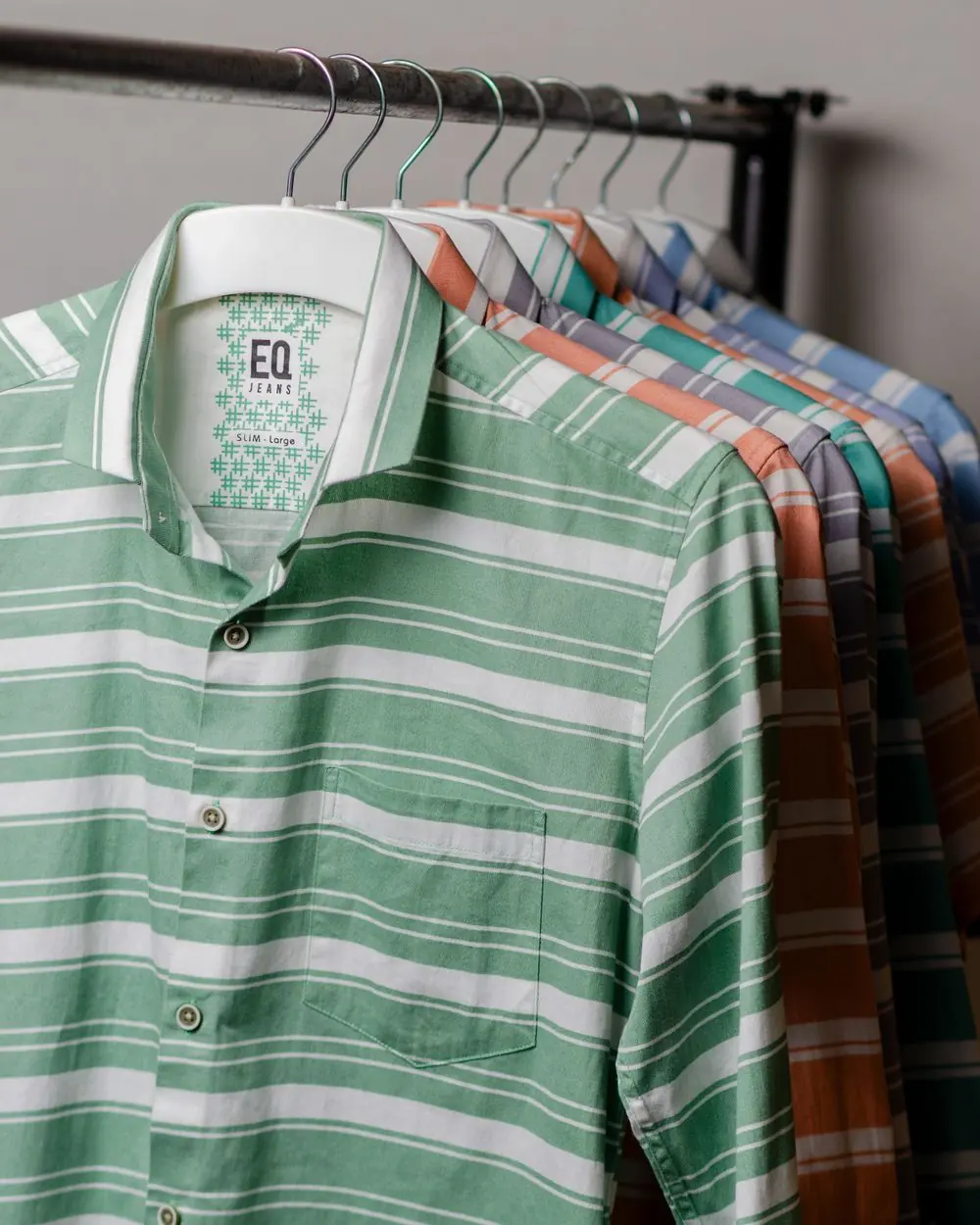
- Design and branding: own check and stripe designs on yarn-dyed fabric, embroidered logos for corporate shirts, custom collar and cuff shapes and private-label packing and hang tags.
About our shirts
We specify poplin and Oxford fabrics by thread count and weight, and ask for a shrinkage and colour-fastness test on each fabric lot before cutting. For checks and stripes, yarn-dyed fabric is woven specifically for your design, which is why the minimum is set by fabric metres rather than garment pieces.
Corporate and uniform buyers often need the same shirt reproduced for years, so we keep fabric codes, patterns and size grading on file and can match a previous order exactly, including shade, when the next order comes.
Buyer's checklist for ordering shirts for Ethiopia
- Choose slim, regular or comfort fit and confirm the block
- Approve fabric weight, thread count and shrinkage limits
- Confirm collar and cuff shape and the interlining grade
- Agree packing: folded with stays or on hangers
- Check shade-match tolerance for repeat uniform orders
- Confirm labelling and fibre-content wording for your market
- Check the import and labelling rules for Ethiopia: imports require an import permit and bank arrangements for foreign currency; goods arrive through Djibouti. Confirm current rules with your bank and broker.
- Agree Incoterms (FOB, CFR or CIF Djibouti) and the payment terms: 50% advance with order confirmation and 50% before dispatch against export documents; L/C at sight can be discussed for larger orders.
How we ship shirts to Ethiopia
Ethiopia is landlocked, so cargo moves by sea to the transit port and then by road or rail. We quote FOB, CFR or CIF, and your clearing agent handles customs and local delivery in Ethiopia; we can coordinate with the forwarder you name.
Folded with collar stays and pins in individual polybags, or hanger-packed for retail chains; 20–40 pieces per carton. Before loading we share a photo, video and measurement report so you can approve what is in the container. Machine wash warm, iron medium; easy-care shirts can be tumble dried; care labelling follows the destination market's textile labelling law.
Documents supplied with every shipment: commercial invoice, packing list, certificate of origin and bill of lading, plus test reports and compliance documents where your market asks for them. Payment terms: 50% advance with order confirmation and 50% before dispatch against export documents; L/C at sight can be discussed for larger orders.
Importing shirts into Ethiopia: local guide
Practical facts for buyers in Ethiopia — working days, time difference, customs system, trade-agreement duty and the seasons to plan around.
| Weekend | Saturday–Sunday (many trading firms also work Saturday mornings) |
|---|---|
| Our office hours in your time | 24×7 — three 8-hour shifts, every day, so the whole Ethiopia working day is covered |
| Country calling code | +251 (our WhatsApp: +91 87809 43729) |
| Business languages | Amharic; we correspond in English |
| Currency | bir (ETB); quotations in USD |
| Customs system | Ethiopian electronic single window (eSW) |
| Trade agreement with India | No India-specific trade agreement; standard (MFN) duty applies |
| Plan orders around | Ramadan and the Eid holidays, plus the Christmas–New Year period |
Shirts range for Ethiopia
Types of shirts available
- Formal poplin shirts
- Oxford button-down shirts
- Casual checked shirts
- Striped business shirts
- Linen-blend summer shirts
- Chambray and denim shirts
- Mandarin-collar shirts
- Short-sleeve office and uniform shirts
Standards: ISO 105 colour fastness, AATCC test methods, OEKO-TEX STANDARD 100 on request, AQL 2.5 inspection or the standard your project specifies. Imports require an import permit and bank arrangements for foreign currency; goods arrive through Djibouti. Confirm current rules with your bank and broker.
Price, duties & landed cost in Ethiopia
| Quotation currency | USD (EUR on request); you pay in bir (ETB) through your bank |
|---|---|
| Incoterms | EXW, FOB Mundra or Kandla (Gujarat), CFR or CIF Djibouti |
| Import taxes | Import duty plus VAT (EAC / COMESA frameworks where applicable) |
| Import conformity | Imports require an import permit and bank arrangements for foreign currency; goods arrive through Djibouti. Confirm current rules with your bank and broker. |
| Export documents | Commercial invoice, packing list, certificate of origin, bill of lading; test reports and compliance documents where your market asks for them |
| Payment | 50% advance with order confirmation and 50% before dispatch against export documents; L/C at sight can be discussed for larger orders. |